5 Inexpensive Home Updates to Complete before Listing Your Home

 There is no perfect formula for selling your home efficiently, but by following these five tips prior to listing you can increase your chances to close quickly at a higher price.

1.) Update your old garage door(s). Garage doors seem like a non-issue, but many times they make up a significant percentage of the front of a home. Because of this, they are one of the first things that buyers notice when they pull in the drive way. Replacing, or even just painting, these central fixtures will do wonders when it comes to instantly impressing perspective buyers and standing apart from your competition. The market has changed drastically since many of us purchased our homes here in town. I frequently hear buyers say that they have taken a house off their list because of the lack of curb appeal. This issue is especially important to people on busier streets, corner lots, or near a neighborhood eyesore. If you’re looking for good garage door repair, contact a professional contractor.

2.) Replace old windows. Outdated windows age a home significantly, and you can often upgrade standard windows to vinyl for a reasonable $300 per window. Maverick Windows offers window replacement in Houston. The average home has 8 windows, so this upgrade doesn’t cost nearly as much as you might think and it will make a huge difference to the value perceived by prospective buyers. Key point to remember is that when buyers view a home they love, if they see it has older windows, they consider it a time consuming and costly headache. First time buyers have never replaced windows and often dramatically overestimate the cost to cure this issue. By replacing pre-listing you an actually save money. A well priced, move-in condition home will sell for far more than one with windows in need of repair.

3.) Assess your floors . If you have hardwood flooring or even vinyl flooring like the ones at vinyl flooring Melbourne, it’s worth the investment to have them refinished considering buyers put an extremely high value on them; you’ll get the most bang for your buck if they are refurbished. Carpets should be shampooed and replaced if they are stained or look worn. You don’t need to spend large amounts of money on the highest grade or most modern name but something inexpensive and neutral will certainly bring you a return on the investment. Even the smell of new carpet will make buyers set your home apart from the comparable.

4.) Paint the trim. If you can’t afford the daunting task of painting your entire house, painting just the trim will still make a big difference when it comes to curb appeal. Painting the whole house can be expensive, time consuming, and delayed by weather conditions; painting just the trim will give your home a fresher look. House painters Pittsburgh PA reminds everyone that interior trim is equally as important. If you need to weatherproof your house, then hiring https://cladding-coatings.co.uk/ is your solution.

5.) Update fixtures. Keep an eye out for sales at home improvement stores and replace outdated lighting, plumbing and hardware fixtures. Simple replacing lighting fixtures and knobs in the bathroom or kitchen can update the entire look of the room. You can find many modern brand name fixtures online on contractor supply websites by just searching for terms like sale faucets, sale plumbing fixtures etc.

Lisa Johnson Sevajian is Vice President of a real estate firm in Andover, MA.

Thank you, www.rismedia.com


I’m happy to come look at your home and offer my advise before you list your home.

John Marcotte

720-771-9401

Search all homes for sale @ www.boulderhomes4u.com

Louisville, CO Ranked #1 Place to Live

MONEY Magazine Reveals Annual “MONEY’s 100 Best Places to Live in America”

 “MONEY” magazine has revealed the list of “MONEY’s 100 Best Places to Live in America,” highlighting small towns across the country with populations of 50,000 or less. For the annual cover-story, on sale August 19, MONEY looked for places with the optimal combination of job opportunities, fiscal strength, top-notch schools, safe streets, good healthcare, cultural and outdoor activities, and even nice weather.

MONEY’s editors write, “With the current state of the economy—and the dispiriting sight of the nation’s leaders endlessly battling about how to fix it—the phrase ‘small town’ conjures up images of a happier time. When unemployment wasn’t above 9%. When people didn’t stress out about home values. When school budgets weren’t under siege. Those were the days, right?”

Louisville, Colorado tops this year’s list at number one. Tewnty-three miles outside Denver, Louisville has a strong economy, stable housing and lots to do. Louisville has some of the lowest crime rates in Colorado and was also ranked No. 1 in 2009 when MONEY assessed places with populations of under 50,000. There are good jobs in Louisville in the tech, telecom, aerospace, clean energy, and healthcare space. Additionally, MONEY editors report that businesses are flourishing in the historic downtown district, writing, “This summer alone saw the opening of three restaurants, a rooftop bar, a coffee shop, a yoga studio, a gift shop, and two art galleries. And world-class outdoor recreation is a short drive away.”

MONEY’s 2011 top-ten list:

1. Louisville, CO [2]
2. Milton, MA [3]
3. Solon, OH [4]
4. Leesburg, VA [5]
5. Papillion, NE [6]
6. Hanover, NH [7]
7. Liberty, MO [8]
8. Middleton, WI [9]
9. Mukilteo, WA [10]
10. Chanhassen, MN [11]

For more best places to live, visit www.Money.com/BestPlaces


John Marcotte

720-771-9401

Search all Louisville homes for sale

3 Tips to sell your home during this time of the year

3 Tips to sell your home during this time of the year

 As temperatures dip and fall settles in with the promise of winter ahead, home owners need to pay extra attention to certain details in order to set themselves apart from the competition.

1. Maintain your landscape. Flowers aren’t exactly flourishing this time of year but sellers should still make the most of what they have in their landscape design. Adding fall flowers like mums to your front porch or deck is always a nice touch. Seeking professional assistance to maintain a good-quality paved patio installation, deck, and landscape design is always the best possible thing you could do. More importantly grass should be cut at least once per week and leaves should be cleared as much as possible.

2. Keep your house warm. Prospective buyers will be turned off by a cold house, not giving it the chance it deserves. Spend the extra money to make your home as inviting and comfortable as possible. Also keep in mind that you don’t want it to be too warm because bundled up buyers will be uncomfortable and your utility bills will sky-rocket. I’d recommend keeping the thermostat set in the upper 60′s.

3. Let in the light. If your showing is during the day, open blinds, windows and drapes. If not, turn on all the lights in the home and brighten darker rooms by placing spotlights behind the furniture.

Fall is a great time to sell your home because a lot of prospective buyers are hoping to make a decision before the holidays. Take advantage of the fall market by pricing your home correctly and working with a licensed and experienced agent.

Chobee Hoy, Owner of Chobee Hoy Real Estate Associates of Brookline, MA has 30 years of real estate experience.

John Marcotte

720-771-9401

Search all Boulder homes for sale 

How Foreclosures Affect Your Credit Score

How Foreclosures Affect Your Credit Score

A foreclosure is damaging to your credit

A bank will foreclose on a home when the homeowner fails to make his mortgage payments and will initiate the foreclosure process when the owner has missed three monthly payments. A written letter is then sent out notifying the borrower that he is in default and has not fulfilled his mortgage obligations. If the borrower does not come up with the amount owed, the lender can sell the property at a public auction. A foreclosure can cause considerable damage to your credit history and decreases your credit report significantly. It will take you many years to restore your good credit.
Foreclosure lowers your credit score
A low credit score prevents you from getting favorable lower interest rates on any form of credit, including home and auto loans and credit cards. A borrower with a score below 600 can expect to receive mortgage interest rates that are several percentage points higher than someone with a score above 700. Lenders may even refuse to grant the borrower a mortgage at any interest rate.
Impact of foreclosure
The foreclosure procedure is usually preceded by late mortgage payments of up to 90 days, already reducing your credit score considerably. Predictably, the homeowner is probably also amiss at paying other bills due to his financial situation: he may also have collections or judgments against him. The foreclosure will reduce the homeowner’s credit report by about 100 to 150 points. The other late payments will damage the score even more.
A foreclosure remains for seven years
If you have had foreclosure proceedings filed against you, it will remain on your credit report for at least 7 years. After that, the foreclosure can only be removed from the report with a written request to do so to all the major credit reporting bureaus.
You can still buy a house
Homeowners are led to believe that once they have had a foreclosure they can never buy a home again. This is not true, as people can buy homes within a year of losing their foreclosed home. Higher interest rates will be imposed and a larger down payment might be required, sometimes as high as 20 percent. This is the time to turn to friends or family members for help if they are willing to be a second lien on the property.
Take care to re-establish your credit
Although most foreclosures stay on a homeowner’s credit report for seven years, it can stay on longer – up to 20 years – because it is part of the public record. Check carefully when you are trying to restore your good credit that the foreclosure has been removed.
Besides bankruptcy, a foreclosure lasts longer than any other item on your credit report. Re-establishing yourself as a good credit risk will take time and careful planning after a foreclosure.

John Marcotte

720-771-9401

Search Boulder foreclosure listings

5 Things You Need to Know to Sell a Home That’s Underwater

5 Things You Need to Know to Sell a Home That’s Underwater

 More and more people are in over their heads when it comes to their home. In this tough economy, many have fallen behind on their mortgages and don’t know where to begin to rid themselves of the property that they can no longer afford.

1. Understand the process. A short sale is when a lender agrees to discount a loan due to an economic hardship on the part of the homeowner. Typically, a short sale is used to prevent a home from being foreclosed. Usually, a bank will allow a short sale if they believe it will result in a smaller loss than the expense required for foreclosing.

2. Compare it to foreclosure results. Foreclosure can be extremely damaging to an individual’s credit report and it can have long-term effects. Since we live in a credit driven society, keeping a good credit rating can save a family thousands of dollars in attractive finance rates for vehicles, home mortgages, and other large items. A negative credit report and poor score can affect everything you do from renting an apartment to buying a car.

3. Bankruptcy and its impact on your future. Filing for bankruptcy will consolidate your debt and can wipe out your liabilities, but it will not prevent an eventual foreclosure, it will only delay it. However, if all you need to do is delay a foreclosure and there is little to no other major outstanding debt which needs to be settled, then there are other methods which may be more suitable. Trying to conduct a short sale while in bankruptcy requires strategy and a plan. It is best to consult with a knowledgeable bankruptcy attorney prior to making any decision in order to gain the proper information and make an appropriate plan. If your home is the only debt that is creating an uncontrollable situation for you, a short sale option is likely your best bet versus a bankruptcy. If you have other debt you need resolved after filing bankruptcy, a short sale is still a necessity unless you don’t care about a foreclosure eventually being reported onto your credit.

4. Discover if you are qualified. Though the process differs based on individual, it is broadly understood that in order to qualify for a short sale, the seller/homeowner must show legitimate hardship. Common reasons include: death, divorce, loss of job, relocation, etc. As long as the property is inevitably headed towards foreclosure it will qualify for a short sale.

5. Consider the benefits. One of the major benefits of a short sale is that it ends the financial and emotional nightmare quickly. From the day a homeowner accepts a contract to the time the property will close can take up to 90-120 days. Losing one’s home is a painful process, but short sales can help families to decrease the time and frustration they spend in financial limbo, and it can help to maintain their credit and move forward into the future.

For more information, visit www.chicagolandshortsale.com/


John Marcotte

720-771-9401

Search all Boulder homes for sale 

10 Ways to Get the Best of Winter When Selling Your Home

10 Ways to Get the Best of Winter When Selling Your Home

 If your home will be for sale this winter, it is important to master certain seasonal issues that are less significant or even non-existent at other times of the year. Here are 10 bits of sage advice from RE/MAX agents that can help put a “Sold” sticker on that yard sign.

“Make sure all the bulbs are working, and stock up on all the right bulbs for lamps and fixtures so burned out bulbs can be replaced immediately,” she advises. “Also, it’s a great idea to keep the lights on in the front of the house even if no showings are scheduled. People are always driving past the house, and keeping it lighted makes it look happy and welcoming.”

She also advises opening the drapes and blinds during the day to let in light and let visitors enjoy the view.

Provide Convenient Parking: It’s vital that buyers have a convenient place to park. They won’t want to walk very far in cold weather or be forced to climb over a snow bank to exit their vehicle. Because parking is often more restricted around condominiums, sellers should make sure their agent can pass along parking details to buyers.

Make It Easy to Enter: Winter showings can get off to an awkward start if prospective buyers arrive with snow or salt on their shoes.

“Make it easy for buyers to deal with their shoes when they arrive,” recommends Barbara Hibnick of RE/MAX Showcase, Long Grove, Ill. “Put a festive area rug at the front door for a great first impression and so visitors can wipe their feet. Have slippers or disposable booties available, along with a bench or chair, if there is room for one, where a visitor can sit and easily remove or put on their boots.”

Keep Odors Under Control: Any home tends to be stuffy in winter when windows are opened rarely. That can allow odors to build up, which can be a turn-off to buyers.

“Pet odors can be especially worrisome in winter,” says Mike Mondello of RE/MAX Synergy in Orland Park, Ill. “Use a room fragrance if needed, but nothing too strong, and I recommend that in winter sellers clean more often.” For example, change the cat litter daily, rather than every third or fourth day, or even consider using an air purifier.

If pets are in the house, consider setting the thermostat control so that the furnace fan runs constantly during the day to keep air moving through the house and dissipate odors. Also try to avoid strong cooking odors, especially if a showing is scheduled that day.

Cultivate a Festive Look: Appropriate decorations for Christmas and even St. Valentine’s Day help give a home a cheerful look during the winter months.

“I really believe that holiday decorations can help homes sell, but don’t go to excess,” suggests Starr Zook of RE/MAX On Track in Aledo, Ill. “Keeping small, decorative white lights on trees and bushes pretty much through the winter season is fine, but other decorations should be taken down quickly once the holiday passes.”

Don’t Ignore the Outdoors: Make a good first impression on buyers with a neatly maintained yard. Walks and steps should be kept clear, especially of snow and ice.

Look after Condo Common Areas: If the home you are selling is a condominium, your job as a seller may be relatively easy in winter, with no snow to shovel or yard work to worry about. However, that is only the case if your condominium association does its job well.

If the association isn’t doing it, the homeowner may have to take responsibility for keeping the entrance area and hallways clean. If the association isn’t getting snow shoveled promptly, consider buying some de-icing salt and sprinkling it judiciously around the building entry.

Don’t Roast Buyers: We all tend to prefer a specific temperature for our homes during the winter, but don’t blast buyers with hot air. Keep the temperature at a comfortable 65 degrees for all showings. Remember, buyers are likely to be wearing their coats even as they walk through the house.

Keep Seasonal Clothing under Control: “One major challenge of selling a home during the winter months is the overabundance of cold weather gear that must be stored,” says Mike Mondello. “A buyer doesn’t want to find the mudroom filled with boots or the hall closet overflowing with heavy coats. Shift some winter coats to another closet and put anything not needed in the closet into storage.”

To keep gloves and scarves from piling up in the front hall or mudroom, put a special container for them, such as a decorative chest, where the family typically enters the home.

Encourage Day Time Showings: A home shows to its best advantage during daylight hours, which are relatively scarce in winter.

“Encourage your agent to show your home before 3 p.m. and have it ready to show by 9 a.m. if you want the best results,” Granacki recommends.

Despite the special challenges of marketing a home during winter, there also are benefits, notes Laura Ortoleva, a spokesperson for the RE/MAX Northern Illinois real estate network.

“Buyers out looking at homes in December or January are, as a group, quite serious about buying. Therefore, sellers tend to benefit because each showing is more productive, and fewer showings are needed to sell the property,” she said.


John Marcotte

720-771-9401

Search all Boulder homes for sale 

Buying a Home? Finally, Times Are Good!

Buying a Home? Finally, Times Are Good!

 Everyone knows that the housing market has been a little daunting for the last several years. Ups and downs, talk of good news and bad news, and a confusing amount of information about rising and falling mortgage rates has rendered the market all but inaccessible for a lot of prospective buyers.

Good news! Times are changing.

Whether you want to buy a home as your long-term residence or as an income property, things are looking up. Remarkably low mortgage rates are making houses more affordable than they have been in decades. Of course, lately, one of the greatest concerns facing you as a prospective homebuyer is whether you can secure that low rate mortgage in the first place. Lenders have tightened standards, requiring steeper down payments and stricter scrutiny of credit scores. But some economists think that might be changing as well. Do you have good credit? A down payment? A steady job? These are all factors that might play in favor of your ability to secure an attractive mortgage rate.

Conventional wisdom has long suggested that owning is better than renting. Renters have been viewed as “throwing money away” because they aren’t accruing equity in a property. However, with shifting interest rates and high property costs, in recent years, renting hasn’t necessarily been a bad option. As a result of the recent housing downturn, many prospective owners have been renting rather than buying, considering options like canary wharf flats to rent.

If you’re planning on buying a new property, hire an expert like a property solicitors they will help you process all the legal documents needed. Also consider hiring a snagging survey team to check all the damages that need to be fixed; check out their website at https://snagging-surveys.co.uk/. To learn about the process of buying a property, hop over to this link for conveyancing services Melbourne – haitchconvey.com.au.

There is a shift going on right now as the market is trending in favor of buyers. House payments are becoming more affordable than any time in recent history. Homeowners can get more for their money: bigger houses for some—or smaller payments for those willing to buy more moderately.

Whether you’re in a position to buy a home you are going to settle into for the long term, or whether you’re looking for a profitable investment, due diligence is key. For investors, the recently popular practice of “flipping” a property should be approached with the greatest amount of caution, knowledge, and savvy. Now might not be the time to try to make money on a quick turnaround.

Investing in real estate has long been a profitable and rewarding endeavor. Just don’t forget to do your homework! You should also take the opportunity to call on an expert. Buying a home can be one of the most valuable investments of your lifetime, so, as you would with any other important decision, gather as much knowledge as possible and lean on the people with the knowledge to help. John Marcotte will be able to show you comparables. Most will have the inside scoop on the communities in addition to being able to point out any nuances that you might not easily find on your own, or through internet research. When interest rates are low and home prices are also low, it is a great time to buy!

Peggy Patenaude is a leader in real estate sales in the Andovers, an affluent suburb of Boston.


John Marcotte

720-771-9401

Search all homes for sale @ www.boulderhomes4u.com

Time to Reality Check the Real Estate Market

Time to Reality Check the Real Estate Market

Rarely does a day go by that I don’t get asked if this is a good time to buy and/or sell a home. Some people might think that my response is always an emphatic “YES!” because I work in real estate. But in truth, there is no right or wrong answer. Every person’s circumstances are unique, so in some cases the answer might be yes, but for others it might make more sense to wait. Allow me to explain.

The good news is that we’re finally coming out of the housing slump of the past five-plus years. Housing is a major driving factor of the U.S. economy, so regardless of whether or not one owns a home, a stronger housing market is good for everyone. For some would-be home sellers, this positive momentum, combined with a rise in home prices and buyer activity, is enough to compel them to list their home. And right now the statistics appear to be on their side.

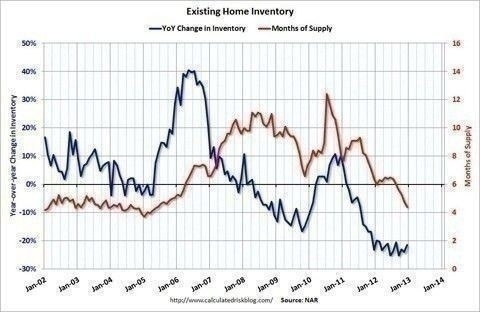
According to the most recent findings from the National Association of REALTORS®, total housing inventory has fallen for the past several months, settling at just under two million existing homes on the market that are available to buyers. This represents about a four-month-supply of homes throughout the U.S. This is the lowest housing supply the nation has seen since May of 2005 – during the peak of the housing boom.

“Months supply” basically means that if existing homes were to continue selling at the current rate, the inventory of homes would be sold by that many months. A “normal” market usually has around six months of supply; therefore lower numbers mean a shortage of inventory. If demand is greater than supply, this often leads to competition amongst buyers – and rising prices – as we’ve seen in many markets throughout the Western U.S.

Here are the current inventory levels in key markets along the West Coast, all of which fall below six months of supply and report strong competition among buyers.

· Seattle: 1.4 months
· Portland: 4.2 months
· San Francisco: 1.8 months
· Las Vegas: 3.8 months
· Palm Springs: 2.5 months

The following graph demonstrates the downward trend in the overall U.S. month’s supply of homes which is currently at about 4.4 months:

Existing-Homes-Chart [1]

So what does this mean for buyers and sellers?

It means as long as inventory levels remain low, competition amongst buyers will remain high, and home prices should continue to steadily rise – albeit at a healthy rate – not like what we saw during the housing boom. As evidence of this, in the recent Home Price Expectation Survey, 105 leading housing analysts called for a 3.1 percent increase in home values by the end of 2013. And in a recent report by the National Association of REALTORS®, median home prices last quarter showed the strongest year-over-year increase in seven years.

Another thing that buyers and sellers need to keep their eye on is interest rates and their impact on affordability. Interest rates have been at such historical lows for so long that it’s easy to take them for granted. But the truth is that several lending institutions, including Freddie Mac and the Mortgage Bankers Association, project that interest rates will rise from 3.4 to 4.4 percent by the end of 2013. A full point increase can have a significant impact on the amount of your mortgage over the long term.

OB Jacobi is the president of Windermere Real Estate.

For more information, visit www.windermere.com


John Marcotte

720-771-9401

Search all Colorado homes for sale

Homebuilding takes a breather; wholesale prices up

Homebuilding takes a breather; wholesale prices up

A vacant and blighted house sits next to a well-kept occupied house in a once thriving eastside neighborhood in Detroit, Michigan January 23, 2013. REUTERS/Rebecca Cook

By Lucia Mutikani

WASHINGTON | Wed Feb 20, 2013 4:30pm EST

(Reuters) – U.S. builders broke ground on fewer homes last month but a jump in permits for futureconstruction to a 4-1/2-year high indicated thehousing market recovery remains on track.

Another report on Wednesday showed wholesale prices rose in January for the first time in four months. However, the gain was smaller than expected and left scope for the Federal Reserve to keep buying bonds to stimulate the economy.

Housing starts dropped 8.5% in January to an 890,000-unit annual rate, pulled down by a sharp drop in the volatile multi-family unit category, the Commerce Department said.

Starts for single-family homes hit their highest level since July 2008, and permits for future construction, which lead starts by at least a month, were at their highest level since June 2008.

The drop in starts followed an outsized gain in December and was confined to the Northeast and Midwest, suggesting winter weather likely contributed to the pullback.

“The fundamentals are there and the drivers are looking good,” said Patrick Newport, an economist at IHS Global Insight in Lexington, Massachusetts. “We see more new construction this year. The only question is whether it will be in the multi-family or single-family segment.”

Housing has shifted from being a headwind for the economy to being a pillar of support, although mortgage rates have crept higher in recent weeks, cooling loan demand.

Luxury homebuilder Toll Brothers on Wednesday reported disappointing quarterly results, hurt in part by lower selling prices, but other homebuilders have been able to take advantage of the recovering market.

A separate report from the Labor Department showed producer prices rose 0.2% last month as rebounding food costs offset declining gasoline prices. Wholesale prices had slipped 0.3 % in December, and economists had expected them to rise 0.4 % in January.

Food prices accounted for more than 75 % of the rise in wholesale prices last month.

INFLATION PRESSURES MUTED

Away from the spike in food prices, the producer price report showed inflation pressures were generally muted.

In the 12 months through January, wholesale prices were up 1.4 % and data on Thursday is expected to show consumer inflation below the U.S. central bank’s goal of 2 %.

“Inflationary pressures remain well contained,” said Diane Swonk, chief economist at Mesirow Financial in Chicago. “The Federal Reserve would rather see inflation slightly higher in response to stronger economic conditions than benign because the recovery remains tepid.”

In an effort to drive down borrowing costs and spur stronger growth, the Fed last year launched an open-ended bond buying program and said it would keep it up until it saw a substantial improvement in the outlook for the labor market.

But minutes of the U.S. central bank’s January 29-30 meeting showed a number of policymakers believed the Fed might have to slow or stop asset purchases before seeing an acceleration in job growth because of concerns over the costs.

U.S. stocks fell on the minutes, with the Standard & Poor’s 500 index posting its biggest one day percentage decline since mid-November.

The dollar rose against a basket of currencies. Prices for U.S. Treasury debt ended higher.

Wholesale prices excluding volatile food and energy costs edged up 0.2 %  last month after gaining 0.1 percent in December. In the 12 months through January, those so-called core prices rose 1.8 %, the smallest gain since February 2011.

(Additional reporting by Jason Lange; Editing by Andrea Ricci, Tim Ahmann and Leslie Adler)


John Marcotte

720-771-9401

Search all Boulder CO homes for sale

Existing home sales edge higher, inventory at 13-year low

Existing home sales edge higher, inventory at 13-year low

A vacant and blighted house sits next to a well-kept occupied house in a once thriving eastside neighborhood in Detroit, Michigan January 23, 2013. REUTERS/Rebecca Cook

U.S. home resales edged higher in January and left the supply of homes at its lowest level in 13 years, a sign that steam is gathering in the U.S. housing market.

The National Association of Realtors said on Thursday that existing home sales rose 0.4 percent last month to a seasonally adjusted annual rate of 4.92 million units.

That was the second highest rate of sales since November 2009, when a federal tax credit for home buyers was due to expire.

Analysts polled by Reuters had forecast a 4.9 million-unit rate.

The U.S. housing market tanked on the eve of the 2007-09 recession and has yet to fully recover, but steady job creation helped the housing sector last year, when it added to economic growth for the first time since 2005.

The nation’s inventory of existing homes for sale, which is not seasonally adjusted, fell 4.9 percent from December to 1.74 million, the lowest level since December 1999.

Many Americans are holding back from putting their homes on the market because they owe more on their mortgages than their homes are worth. A sharp drop in inventories over the last year has given developers more incentive to build homes. Home building is expected to boost the economymore in 2013 than it did last year.

Inventories were down 25.3 percent from January 2012.

At the current pace of sales, inventories would be exhausted in 4.2 months, the lowest rate since April 2005.

The low inventories are also helping pushing prices higher.

Nationwide, the median price for a home resale was $173,600 in January, up 12.3 percent from a year earlier.

(Reporting by Jason Lange)


John Marcotte

720-771-9401

Search all Boulder CO homes for sale