Fannie Mae and Freddie Mac Help More Than 2.5 Million with Foreclosure Prevention Actions

Fannie Mae and Freddie Mac Help More Than 2.5 Million with Foreclosure Prevention Actions

Fannie Mae and Freddie Mac completed more than 134,000 foreclosure prevention actions in the third quarter of 2012, bringing the total foreclosure prevention actions to more than 2.5 million since the start of conservatorship in 2008 with nearly 1.3 million of those actions being permanent loan modifications. These actions, which have helped more than 2.1 million borrowers stay in their homes, are detailed in the Federal Housing Finance Agency’s third quarter 2012 Foreclosure Prevention Report, also known as the Federal Property Manager’s Report.

The quarterly report has information on state delinquencies and an updated, interactive Borrower Assistance Map for Fannie Mae and Freddie Mac mortgages, with information on delinquencies, foreclosure prevention activities and Real Estate Owned (REO) properties.

Also noted in the report:

• Year-to-date, Fannie Mae and Freddie Mac have completed nearly 411,000 foreclosure prevention actions.
• Nearly 38,000 short sales and deeds-in-lieu were completed in the third quarter, up 4 percent compared with the second quarter.
• 45 percent of troubled borrowers who received loan modifications in the third quarter had their monthly payments reduced by more than 30 percent.
• More than one-third of loan modifications completed in the third quarter included principal forbearance.
• The number of the Enterprises’ delinquent borrowers has declined 9 percent since the beginning of 2012.

REO inventory continued to decline as property dispositions outpaced property acquisitions during the third quarter.

For more information, click here


John Marcotte

www.boulderhomes4u.com

720-771-9401

Homeowners Take a Fresh Look at Remodeling

Homeowners Take a Fresh Look at Remodeling

remodel_kitchen_blueprint If you’ve put off redoing that kitchen or adding a deck while waiting for the economy to perk up, welcome to the club.

Like the rest of the housing market, home improvements and remodeling plunged during the recession as consumers hunkered down.

But now that economic conditions are improving, the forecast for home fix-ups is looking up, too.

“Future market indicators, which have been lagging a little bit, have jumped up,” said Paul Emrath, a research vice president with the National Association of Home Builders. “Calls for bids and appointments for remodeling proposals are increasing significantly.

“They are basically as high as they have ever been,” Emrath told builders meeting for the industry’s annual exposition last week in Las Vegas.

The outlook for home remodeling in the year ahead is the best it’s been in almost a decade, based on the most recent remodeling industry surveys by the homebuilders’ association.

Home improvement expenditures are forecast to rise by almost a third from the worst of the market in early 2011 to late this year.

Remodeling fell by about 30 percent during the recession.

“That’s not as big as the decline in housing starts, which was closer to 80 percent,” Emrath said. “Our forecast is for slow and steady increases going forward.

“There is still pent-up activity waiting to be released,” he said. “We had a lot of projects put off as we went through the decline.”

Some remodelers say they’ve already seen a bounce in their business.

“Most remodelers definitely saw a rebound in the market in 2012 and are expecting continued growth in 2013,” said Lisa Parelli, president of the Dallas chapter of the National Association of the Remodeling Industry.

During the recession, more of the remodels that Parelli saw in the Dallas area were home facelifts necessary to fix up a property for sale. “But, now they are starting to see the bigger projects come back to life such as additions, complete tear-outs, whole house renovations,” she said.

Nationwide, the most popular home remodeling jobs, based on total expenditures, include kitchen remodels, bathroom upgrades like tub to shower conversion, and bedroom add-ons, as well as adding speakers to these rooms, according to a new study released this week by the Joint Center for Housing Studies of Harvard University.

“There is pent-up demand and stuff that has been put off,” said Harvard housing researcher Kermit Baker.

Baker said Americans have spent big dollars repairing and remodeling formerly foreclosed and distressed homes, about $10 billion in 2011.

Researchers are also predicting a surge in home retrofitting to improve energy efficiency. “We still think there is a lot of opportunity for greening up the housing stock,” Baker said.

Houston remodeler Bill Shaw said many homeowners get sticker shock when they finally decide to remodel.

“They still want new kitchens, they still want new baths,” said Shaw, who has been in business for 30 years. “All the ingredients for growth are there, until they find out how much it is going to cost.”

Shaw said during the recession when remodeling business lagged, his industry saw new competition from traditional builders.

“We’ve seen a tremendous increase in custom builders getting into remodeling,” he said.

And unlike in previous downturns, many of these builders have decided to stay in the home improvement business even as home starts increase, Shaw said. Home value declines in many markets during the last few years also made it tougher for remodelers. Lenders and appraisers wouldn’t OK expensive home improvements in neighborhoods where home prices fell sharply.

“As the equity and housing values increase, I think we will get back to more larger projects,” said Bob Hanbury, a remodeler from New England.

He said homeowners are more frugal when it comes to redos. “It doesn’t have as many of the bells and whistles; people are picking and choosing what they want,” Hanbury said. “You can’t provide them all the great features as in the past because their budget isn’t big enough.”

©2013 The Dallas Morning News
Distributed by MCT Information Services


John Marcotte

www.boulderhomes4u.com

720-771-9401

Harvard Study Reports on Recent Trends in Home Equity and Housing Stock

Harvard Study Reports on Recent Trends in Home Equity and Housing Stock

 2011, down 4 percent from 2009 levels and some 16 percent below the market peak in 2007. Loss of home equity with the onset of the housing crash contributed to the decline in home repairs, according to a new study by the Harvard Joint Center for Housing Studies.

With the decline in spending on discretionary projects, home improvement expenditures per owner in 2011 stood well below levels averaged over the previous decade. In fact, per-owner spending fell from about 25 percent above the decade average in 2007 to about 10 percent below that level in 2011,

Near the top of the list of causes for the decline in home improvement spending is the loss of home equity resulting from the unprecedented plunge in house prices during the housing crash. After several years of strong house price appreciation, homeowners nationwide had almost $13 trillion in equity in 2006, or almost $170,000 per owner on average. By 2011, however, aggregate home equity had dropped by half to $6.5 trillion, or $87,000 per owner.

Since home equity is a major source of wealth for most owners, sharply lower house values make owners feel less wealthy and therefore less likely to spend in general and on improvements in particular. And with less equity available and credit still tight, households are finding it more difficult to get financing for projects. In 2011, owners with under 20 percent equity in their homes spent about 22 percent less on average on home improvements and about 30 percent less on discretionary projects than owners with at least 20 percent equity. In fact, owners with some but less than 20 percent equity spent about the same as those with zero or negative equity in that year. Owners without mortgages-primarily older owners-also spent about the same as owners with less than 20 percent equity.

In 2011, the Harvard study found that more than a million distressed properties came back onto the housing market, including 760,000 lender-owned units and 300,000 short sales. Lenders improved about a third of their foreclosed properties prior to sale, with an average expenditure of about $6,500 per unit. About 60 percent of owner-occupant purchasers undertook improvements, averaging $11,100, while investors spent even more per unit on average than either lenders or owner-occupants, $15,600.

The Harvard study also noted the role investors are playing turning foreclosures into affordable rentals. Some 4.4 million formerly owner-occupied units were shifted to the rental market between 2007 and 2011. Another 4.6 million were vacant in 2011 and may become part of the rental stock as demand continues to grow.

The unexpected investor expenditures to improve the quality of America’s single family housing stock came as the nation began to experience what the Harvard study calls an “uptick” in the deterioration of housing quality at the outset of the housing crash. In 1997, 4.4 percent of owner-occupied homes were considered inadequate, the study said. By 2007, these same units accounted for almost 8 percent of homes that were no longer owner-occupied (i.e., stood vacant or were converted to rental or nonresidential uses), indicating their increasing deterioration. Even more telling is that these inadequate units accounted for almost 17 percent of the homes that were demolished within the decade.

The study also tracked lender spending to restore REO properties for sale. During the housing downturn, the plunge in house prices precipitated a wave of foreclosures in many metropolitan areas. The foreclosure process often takes years to complete, wreaking havoc on mothballed and backlogged properties. But once foreclosure is completed, banks and other institutions typically invest in repairs to get the homes ready for sale and back into active use.

According to Joint Center estimates, lender expenditures on distressed properties amounted to $1.7 billion in 2011, with Atlanta, Las Vegas, Orlando, Phoenix, and Riverside posting the highest shares of spending. Local housing market conditions dictate the average amount that banks and institutions expend to prepare distressed properties for the market. In 2011, lenders invested considerably more per property in higher-priced markets such as Denver, Los Angeles, Portland, Raleigh, and Washington, DC. In large measure, this disparity reflects the fact that properties in these markets often need to be in better condition to sell at a competitive price within a reasonable amount of time.

By comparison, in depressed Rust Belt metros such as Cleveland, Detroit, Milwaukee, and Pittsburgh, improvement spending per REO property was less than a third of outlays in more competitive markets.

“Renovating foreclosed or abandoned homes benefits the entire neighborhood. Joint Center research has shown that home prices in neighborhoods with higher levels of improvement spending appreciate more rapidly, explaining why investing in blighted neighborhoods has been a national priority in dealing with the foreclosure crisis,” said the report.

For more information, visit www.realestateeconomywatch.com


John Marcotte

www.boulderhomes4u.com

720-771-9401

FHFA House Price Index Up 0.6 Percent in November

FHFA House Price Index Up 0.6 Percent in November

U.S. house prices rose 0.6 percent on a seasonally adjusted basis from October to November, according to the Federal Housing Finance Agency’s monthly House Price Index (HPI). The previously reported 0.5 percent increase in October was revised upward to a 0.6 percent increase. For the 12 months ending in November, U.S. prices rose 5.6 percent. The U.S. index is 15.2 percent below its April 2007 peak and is roughly the same as the August 2004 index level. National home prices have not declined on a monthly basis since January 2012.

For the nine census divisions, seasonally adjusted monthly price changes from October to November ranged from -1.0 percent in the East North Central division to +2.1 percent in the Mountain division, while the 12-month changes ranged from +0.5 percent in the Middle Atlantic division to +14.8 percent in the Mountain division. FHFA uses the purchase prices of houses with mortgages owned or guaranteed by Fannie Mae or Freddie Mac to calculate the monthly index. Monthly index values and appreciation rate estimates for recent periods are provided in the table and graphs on the following pages.

For more information, click here


John Marcotte

www.boulderhomes4u.com

720-771-9401

Today’s First-Time Buyers Are Realistic

Today’s First-Time Buyers Are Realistic, Planners

First-time home buyers have long been an important part of the housing market. And that hasn’t changed today. According to the 2012 Profile of Home Buyers and Sellers from the National Association of REALTORS®, first-time buyers accounted for 39 percent of all housing sales from July 2011 through June 2012.

But what do these first-time buyers want? In Chicago and its suburbs, first-time buyers are looking for homes that are located near public transportation and are large enough for them to grow into as they expand their families. For other first-time buyers, affordability is a key issue. These buyers are looking to work with sellers who are willing to pay for at least part of the closing costs of their mortgage loans.

These are the observations of agents in the RE/MAX Northern Illinois real estate network who are helping first-time buyers negotiate today’s housing market.

And these agents agree that first-time buyers are an important, and active, part of the Chicago-area housing scene.

“First-time buyers are my primary market at this time,” says Laurie Christofano, with RE/MAX in the Village, Realtors®, in Oak Park, Ill. “There has been a new excitement among first-time buyers during the last year. They see that we are at the bottom as far as housing prices go. They understand just how low interest rates are. And they have gotten the message that homeownership in the long-term is a really good thing as far as being able to provide stability for their families, build up equity and fashion a long-term plan for their lives.”

Room to grow

Jeff Donnellan, with RE/MAX Vision 212 in Chicago, says that he advises first-time buyers to skip the starter-home mentality and instead purchase a larger home within their budget that they can grow into as their needs change.

For instance, instead of buying a two-bedroom condo, first-time buyers might instead choose a single-family home or condo that boasts three bedrooms and two bathrooms. That way, if the buyers should have a baby, they’ll have enough room. They won’t have to immediately move again.

“I recommend that my first-time buyers find a home that will suit them for a good five years,” Donnellan says. “If their lives change, a versatile home is a stable part of their lives instead of a burden. And it usually takes five to seven years for most owners to pay down their mortgage enough, while their home appreciates enough, to be able to sell and make a profit. They won’t have to bring money to the closing.”

Many first-time buyers are following this advice, Donnellan reports. And Christofano agrees.

Christofano says that today’s home buyers, thanks to the myriad real estate stories populating the Internet, are a savvy bunch. They know how important it is to buy a home that they can settle into for five years or more.

And with housing prices still at affordable levels across Chicago and its suburbs, it’s easier for first-time buyers to get into those homes that are a bit larger.

“I’m seeing first-time buyers who are planning for the long term,” Christofano adds. “Many of them are bypassing the condo stage completely. In previous years, that would have been their first stepping stone of homeownership. Instead, they are choosing single-family homes with at least three bedrooms. Some are choosing homes with four or five bedrooms so that they can grow into them. They don’t want to be forced to move out too soon.”

James Ludes, an agent with RE/MAX Top Properties in Morris, Ill., says that today’s first-time buyers are more realistic than they were in the past. Ludes has worked in residential real estate for 10 years, so he witnessed the housing boom of the early to mid-2000s.

Back then, first-time buyers frequently stretched their budgets to get into the largest homes possible. Today, though, first-timers are more budget-conscious, looking for homes that will suit their needs and allow for growth but not put them in financial peril.

“At the peak of the market, your first-time buyers were going for the gusto,” states Ludes. “They were looking for everything they could get in a house. If they were pre-approved for a mortgage loan of $240,000, they’d want to see everything up to $250,000. If they could get 3,000 square feet and it was just two people, why not? Today, first-time buyers are being more realistic. They are looking for homes that will serve their needs for the amount of time they plan on staying there.”

Location

As with all buyers, first-time buyers are interested in location. But RE/MAX agents say that today’s first-time buyers are frequently looking for homes located within walking distance of public transportation, restaurants and shops.

And if buyers can find a home that allows them to ditch their cars? That’s even better, adds Donnellan.

“Public transportation is a big key for a home’s value. If someone can live close to public transportation and if that person doesn’t need a car, that buyer can afford a lot more home. If you don’t have to worry about car payments, paying for gas, insurance and all the other costs associated with owning a car, you’ll have more money to get the right home.”

Christofano says that many of her first-time buyers might not want to live in Chicago, but do want to feel connected to the city. They can do this by living near public transportation.

And if they can buy outside of the city itself, these first-time buyers can afford more home.

Other first-time buyers are looking to work with sellers who are willing to pay for part or all of their closing costs. Again, this helps buyers who’ve never owned a home get into a potentially larger residence that will allow them space to grow their families, Christofano adds.

“Finding sellers who are willing to contribute to closing costs is one of the top things that are attractive to my first-time buyers today,” says Christofano.

A top market for first-timers

No matter what features first-time buyers are looking for today, this remains a strong market for them.

Housing prices in the Northern Illinois region are at affordable levels. Interest rates are at historic lows.

At the same time, rents continue to rise. This makes owning a home sometimes more affordable than renting an apartment.

Ludes says that he’s surprised there aren’t even more first-time buyers in the Chicago area.

“If you can buy a house now, why wouldn’t you?” Ludes asks. “Anyone who can get a mortgage loan today with an interest rate in the threes? Why wouldn’t that person want to buy a home? It always surprises me when people continue paying rent when they don’t have to. This is a great market if you’re looking for your first home. If you’re going to live in this region and work in this region, I really think you should buy a home today.”

For more information, visit www.illinoisproperty.com , www.remax.com or blog.illinoisproperty.com


John Marcotte

www.boulderhomes4u.com

720-771-9401

Erie Area Information

Erie Area Information

Don’t let the “town” in Erie’s title fool you. This is a full service community that by the end of the summer of 2012 will have its own state of the art Olympic cycling training facility.
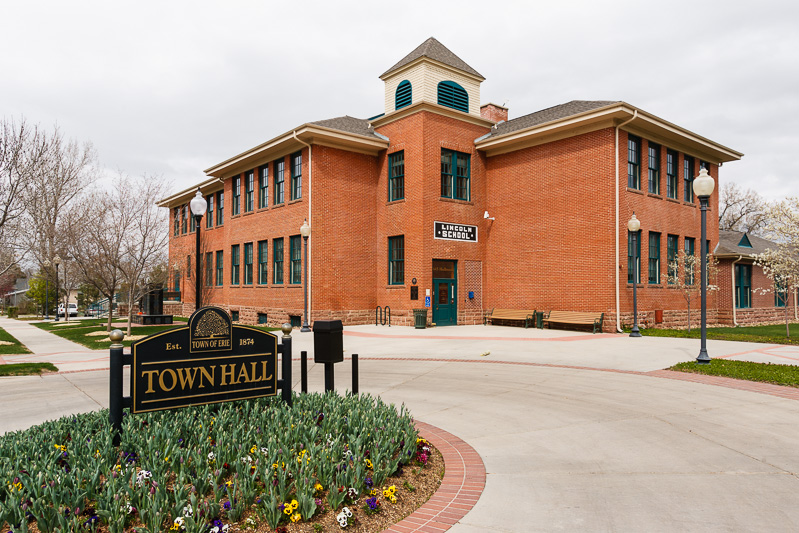


Located just west of Interstate of 25 in southern Weld County, Erie is eagerly anticipating the Boulder Valley velodrome. The facility is expected to attract athletics of all levels, and will easily accommodate Olympic level cyclists – no small feat for a town the size of Erie.

Erie, which likes to cultivate its community centric, small town feel, also boasts an award winning community center, 20,000 square foot library, new schools and scenic trails.

According to the town, Erie is also committed to sustainability. Eco-friendly civic development and environmentally “green” practices includes a town wide interconnecting trail system, a water saving irrigation system in its public parks and a thermal solar system installation at the Erie Community Center. Erie Community park, a 41 acre “green” area, was opened in 2010

This environmentally friendly spirit has caused some turmoil in recent months with another one of Erie’s booming but controversial oil and gas development. Encana Oil and Gas, an energy producer with natural gas wells in Erie, has received a lot of push back from Erie residents over drilling in the area, most notably a site called Canyon Creek between two elementary schools.

Transportation options include the Erie Municipal Airport, owned and operated by the town of Erie. The general aviation facility is located three miles south of the central business district.


Erie Profile:

Square miles: Planning square miles – 48, Incorporated square miles – 18

Population: 20,000

Labor force: 8,723 (2010 Census)

Employment: 8,444 (2010 Census)

Per capita income: $38,688 (2010 Census)

Median household income: (100,288 (2010 census)

Households: 6,797, with additional 4,105 units approved

Online Resources

Erie Chamber of Commerce: www.eriechamber.org

Town of Erie: www.ci.erie.co.us

Upstate Economic Development: www.upstatecolorado.org

Presented by Boulder Area Realtor Association


John Marcotte

www.boulderhomes4u.com

720-771-9401

Mortgage Rates Mostly Flat

Mortgage Rates Mostly Flat

mortgage_rate_scale Freddie Mac recently released the results of its Primary Mortgage Market Survey® (PMMS®), showing mortgage rates largely unchanged from the previous week helping to keep homebuyer affordability high, refinancing strong and should continue to aid the ongoing housing recovery.

Results showed that the 30-year fixed-rate mortgage (FRM) averaged 3.38 percent with an average 0.7 point for the week ending January 17, 2013, down from last week when it averaged 3.40 percent. Last year at this time, the 30-year FRM averaged 3.88 percent.

Additionally, the 15-year FRM this week averaged 2.66 percent with an average 0.7 point, the same as last week. A year ago at this time, the 15-year FRM averaged 3.17 percent.

The 5-year Treasury-indexed hybrid adjustable-rate mortgage (ARM) averaged 2.67 percent this week with an average 0.6 point, the same as last week. A year ago, the 5-year ARM averaged 2.82 percent.

The 1-year Treasury-indexed ARM averaged 2.57 percent this week with an average 0.4 point, down from last week when it averaged 2.60. At this time last year, the 1-year ARM averaged 2.74 percent.

Average commitment rates should be reported along with average fees and points to reflect the total upfront cost of obtaining the mortgage. Visit the following links for Regional and National Mortgage Rate Details and Definitions. Borrowers may still pay closing costs which are not included in the survey.

“Mortgage rates were flat to down a little this week amid reports that inflation remains contained,” says Frank Nothaft, vice president and chief economist, Freddie Mac. “The overall producer price index rose 0.1 percent between November and December, below the market consensus forecast, and the consumer price index was unchanged. For the year as a whole, consumer prices rose just 1.7 percent in 2012, almost half that of 2011′s increase of 3.0 percent.”

For more information, visit www.FreddieMac.com


John Marcotte

www.boulderhomes4u.com

720-771-9401

The Good and the Bad of the Latest Existing Home Sales Numbers

The Good and the Bad of the Latest Existing Home Sales Numbers

The National Association of REALTORS® (NAR) released their latest statistics for existing home sales last week, and the numbers show both some positives and negatives regarding America’s housing industry. Home sales are up and so are selling prices, but foreclosures and short sales still make up a large portion of the sales numbers.

So, what’s the good news? Even with the highly-populated Mid-Atlantic and Upper East Coast regions still being affected by Hurricane Sandy, national sales numbers were up in October. The report from NAR shows a 10.9 percent increase in existing home sales when comparing numbers from October 2012 to the same month in 2011. The national median existing-home price (S178,600, to be exact) is also up 11 percent when compared to the same month last year. That’s the eighth consecutive monthly year-to-year increase. We hadn’t seen an increase for so many months in a row since the period from October 2005 to May 2006.

NAR’s Chief Economist, Lawrence Yun, says rising home prices have already resulted in $760 billion worth of growth in home equity during the past year. He estimates that could increase to close to a $1 trillion gain in 2013. Total housing inventory — meaning the number of homes currently available on the market — dropped to 2.14 million across the country. At the current sales rate, that’s a 5.4-month supply. That’s also down from October 2011, when there was a 7.6-month supply of inventory. The median time a home was on the market before selling was 71 days in October, down from 96 days during the same month last year. And finally, according to Freddie Mac, the national average commitment rate for a 30-year, conventional, fixed-rate mortgage fell to a record low 3.38 percent in October. Compare that to October 2011, when the rate was 4.07 percent.

So, what’s the bad news? Distressed homes still accounted for a large chunk of all home sales in October. In fact, 24 percent of all of the homes sold in October were either foreclosures or short sales. That’s a decrease from the same month last year (when foreclosures and short sales made up 28 percent of the homes sold around the country), but economists at NAR say all of those distressed properties are bringing down the national median sales price — and that’s not good. According to NAR, foreclosures sold for an average discount of 20 percent below market value of the homes, while short sales were discounted 14 percent. While interest rates continue to hover near all-time record lows, they are expected to rise in the months to come. That’s due to the looming “fiscal cliff”, increased retail sales during the holidays, and higher-than-expected numbers of new-home construction across the country. More homes being built creates jobs, and whenever Wall Street sees an increase in jobs, they quickly up the bidding on stocks and sell off bonds. When that happens, mortgage rates elevate quickly.

While Hurricane Sandy didn’t affect October numbers too much, Yun expects the storm to have an impact on sales in the future. Most October transactions were complete before the storm hit, so it’s too soon to determine how much the storm will effect home sales in the Northeast. Yun says the pause and delays in the storm-impacted regions will certainly hurt sales numbers in that area of the country, but it could also affect national sales figures as well.

SOURCE: RealtyPin.com


John Marcotte

www.boulderhomes4u.com

720-771-9401

More Americans Believe Economy Headed in Right Direction

More Americans Believe Economy Headed in Right Direction

Despite continued uncertainty surrounding the fiscal cliff, Americans are showing increased confidence in the housing market and the direction of the economy. According to results from Fannie Mae’s November 2012 National Housing Survey, such improvement bodes especially well for continued strengthening in the housing sector, which in turn is likely to support overall economic growth.

“Consumer attitudes toward both the economy and the housing market continue to gather momentum, with many of our 11 key National Housing Survey indicators at or near their two-and-a-half-year highs,” says Doug Duncan, senior vice president and chief economist of Fannie Mae. “On the housing front, attitudes about the current selling environment continue to improve, with a significant increase in those saying it would be a good time to sell. This growing confidence in a housing recovery, in addition to other factors, may reinforce growing consumer optimism regarding the improving direction of the general economy. Those indicating that the economy is on the right track has risen to 44 percent while those saying it’s on the wrong track has fallen to 50 percent, the smallest gap since the survey’s inception.”

The November survey results show significant movement across many of the indicators. The share of respondents who say now is a good time to sell a home jumped 5 percentage points in November to 23 percent – the highest level since the survey began in June 2010 – narrowing the gap with those who say it is a good time to buy. The percentage of respondents who expect mortgage rates to go up increased by 4 percentage points to 41 percent. Those expecting home prices to go down within the next year also rose by 4 percentage points to 14 percent over last month, a rebound from the survey’s record low in the prior month, while the share who believe home prices will go up in the next 12 months edged up to 37 percent, tying the survey high. Of note, 51 percent of respondents now say it would be easy to get a mortgage, marking the highest rate since the survey’s inception (this survey finding is in addition to the 11 National Housing Survey indictors).

When asked about the economy, those who say it is on the wrong track dipped 6 percentage points since October and a total of 25 percentage points in the past year. Respondents expressed some improvement in the status of their current finances; however, due potentially to the looming fiscal cliff, the share who expect their personal financial situation to get worse over the next 12 months rose 5 percentage points to 18 percent – the highest level since December 2011.

Survey Highlights

Homeownership and Renting

• Average home price change expectation held steady at 1.7 percent.
• Fourteen percent of those surveyed say that home prices will go down in the next 12 months, a 4 percentage point increase over last month.
• The percentage who think mortgage rates will go up continued to rise, increasing 4 percentage points in November to 41 percent.
• Twenty-three percent of respondents say it is a good time to sell, a 5 percentage point increase over last month, and the highest level since the survey’s inception.
• The average rental price expectation hit 4 percent in November, a 0.9 percent rise over the past two months.
• Forty-eight percent of those surveyed say home rental prices will go up in the next 12 months, a slight decrease from last month.
• The share of respondents who said they would buy if they were going to move held relatively steady at 67 percent.
• Fifty-one percent of respondents now say it would be easy to get a mortgage, marking the highest rate since the survey’s inception.

The Economy and Household Finances

• Hitting 50 percent for the first time since the survey’s inception, the percentage who think the economy is on the wrong track has declined by 25 percentage points over the past year, and by 6 percentage points from last month.
• The percentage who expect their personal financial situation to get worse over the next 12 months rose 5 percentage points to 18 percent, the highest level since December 2011.
• Meanwhile, 21 percent of respondents say their household income is significantly higher than it was 12 months ago.
• Household expenses remained stable over the past month, with 56 percent responding that their household expenses stayed the same compared to 12 months ago.

For more information, visit www.fanniemae.com


John Marcotte

www.boulderhomes4u.com

720-771-9401

Treasury to Announce Big Changes to HAFA Program

Treasury to Announce Big Changes to HAFA Program

Teasury_Bldg_on_currency The U.S. Treasury Department will be making some changes to the HAFA Program in 2013, and as a real estate professional, these changes will affect short sales in your local market.

To prepare yourself for the upcoming changes, you can view this live webinar that will take place on December 17th at 4 p.m. ET with Laurie Maggiano, the Treasury’s Director of Public Policy and Alex Charfen, CEO and author of the Certified Distressed Property Designation.

During this live streaming broadcast, Maggiano and Charfen will discuss how these changes will impact the speed and success of your short sales and the foreclosure inventory that reaches our markets.

From the webinar, you will gain insight on the following topics:

• How to speed up your deals and streamline your short sale package for faster approval using the new “pre- determined” hardship categories
• Which current HAFA documents are no longer mandatory and how this will affect your current deals
• What new anti-fraud affidavit you must provide both the buyer and seller to verify the HUD1 Statement is at arm’s length
• The condensed approval timeline servicers, which are now required to use, and how this change benefits your business
• How your ability to negotiate will change with the new increase in available incentives for subordinate lien holders
• Why you might experience a surge in investor business when the “prohibition against resale” is reduced from 90 to 30 days.

To view this webinar, live Monday December 17th at 4 pm ET, register at no cost here .

For more information, visit www.cdpe.com


John Marcotte

www.boulderhomes4u.com

720-771-9401